

MD&A · 2025
In this section4 topics
Overview of Operations
Overview of Operations
Executive Summary
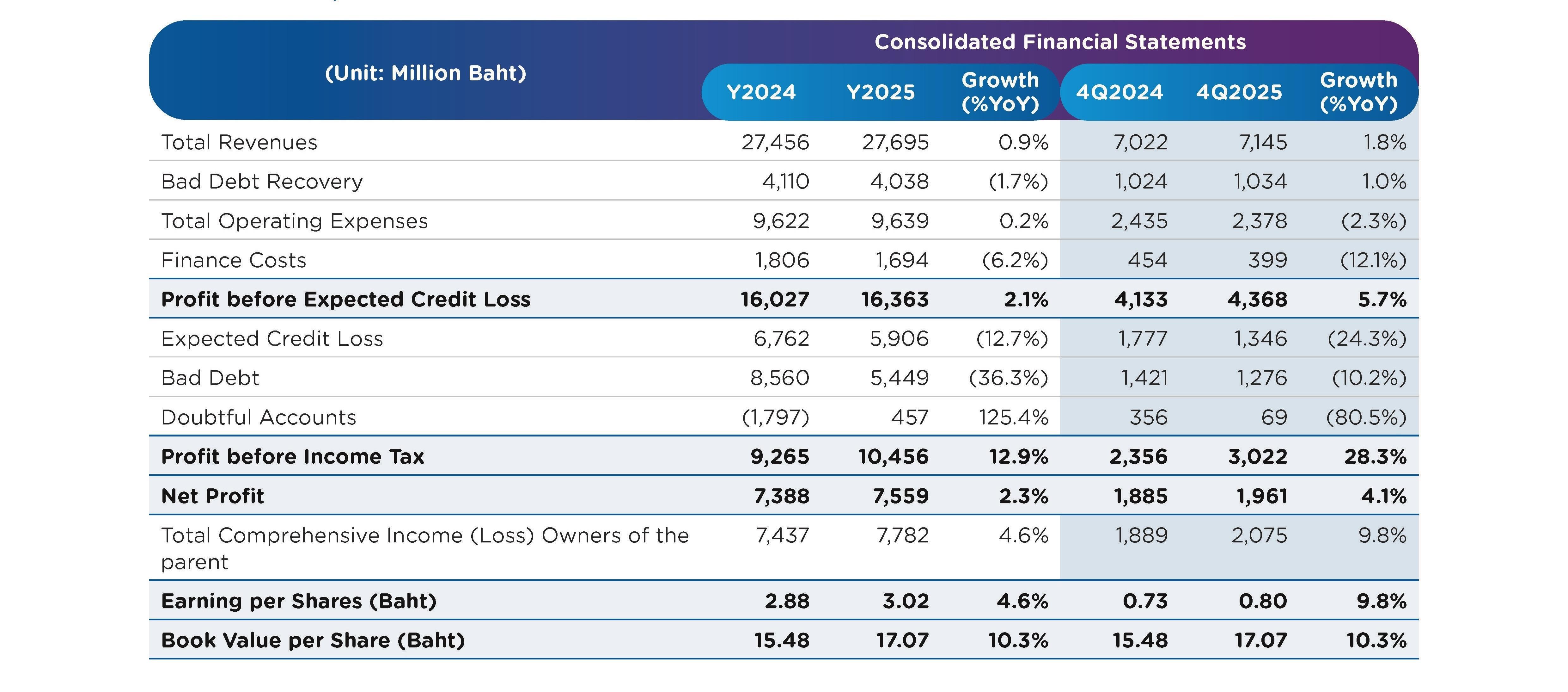
In 2025, Krungthai Card Public Company Limited (“KTC” or “the Company”) and its subsidiaries (“the Group”) reported a net profit of THB 7,782 million, an increase of 4.6% (YoY). The Company’s separate financial statements recorded a net profit of THB 8,289 million, representing a 10.2% (YoY) increase.
The Group maintained its base total revenue in 2025 at THB 27,695 million, a slight increase of 0.9% (YoY). Total expenses for the year amounted to THB 17,239 million, a decrease of 5.2% (YoY), mainly due to a reduction in expected credit losses resulting from effective asset quality management, as well as lower financial costs driven by reduced borrowings and a lower cost of funds. Operating expenses rose slightly, driven by marketing expenses from promotional campaigns aimed at stimulating credit card spending and new member acquisition. As a result cost to income ratio of 34.8%, a slight improvement from 35.0%.
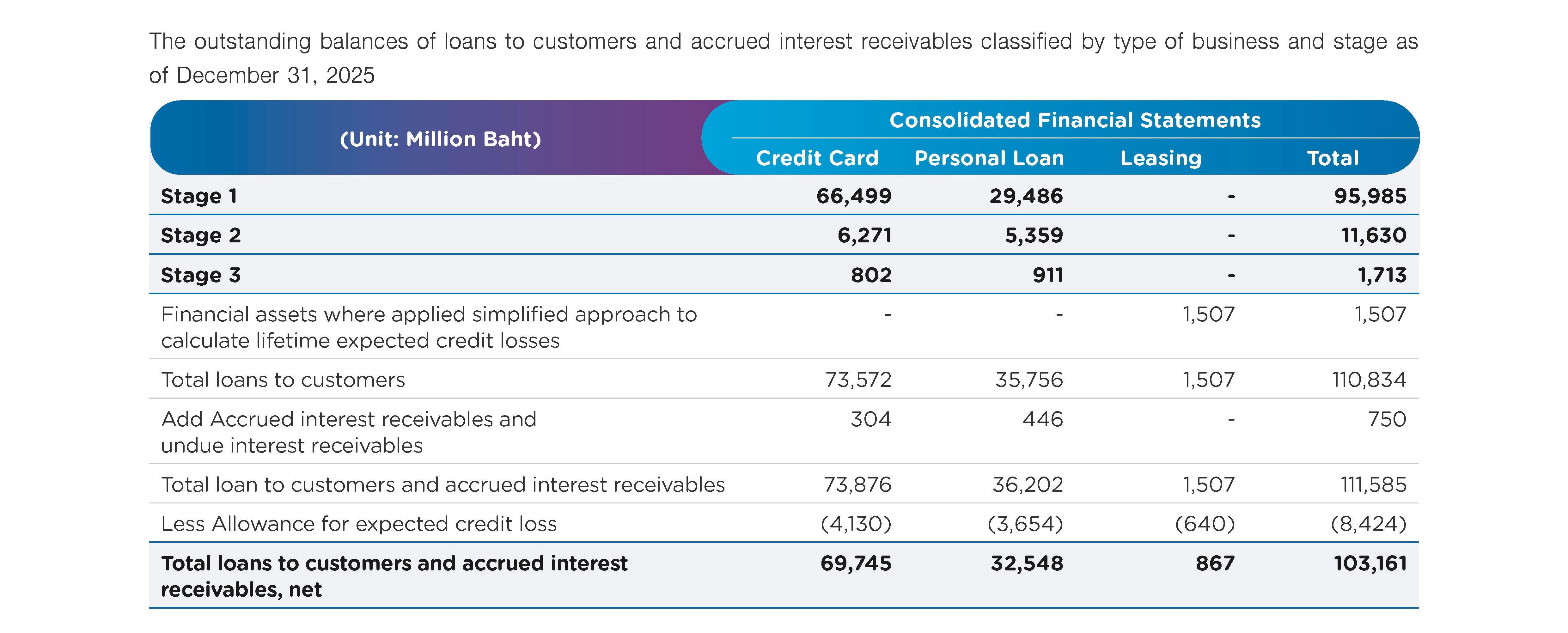
At the end of 2025, the Group’s portfolio value stood at THB 111,585 million, a modest increase of 0.4% (YoY). This consisted of a 0.1% (YoY) contraction in the credit card portfolio, while credit card spending volume grew 3.6% (YoY). The personal loan portfolio grew 3.2% (YoY). KTC continued to prioritize portfolio growth alongside stringent credit quality screening under acceptable risk parameters.
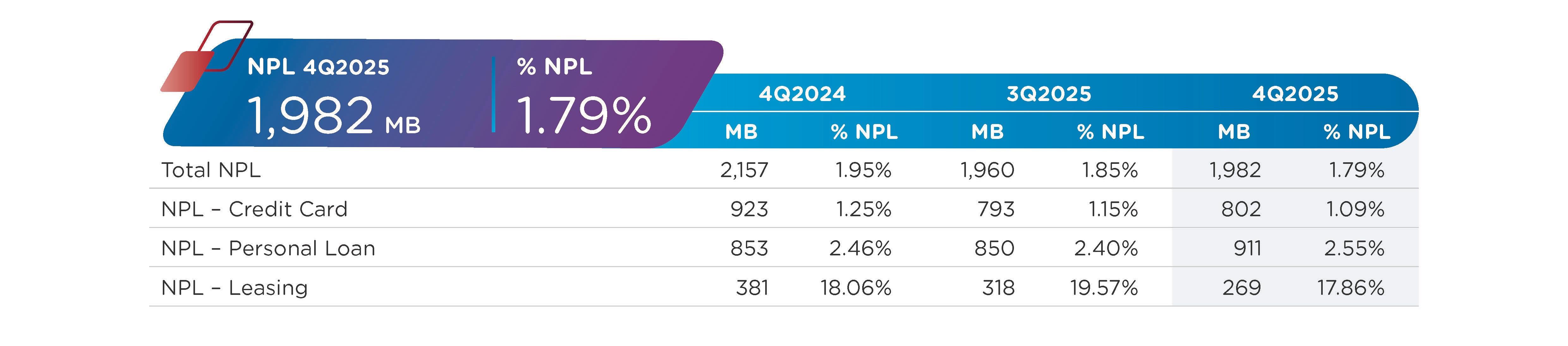
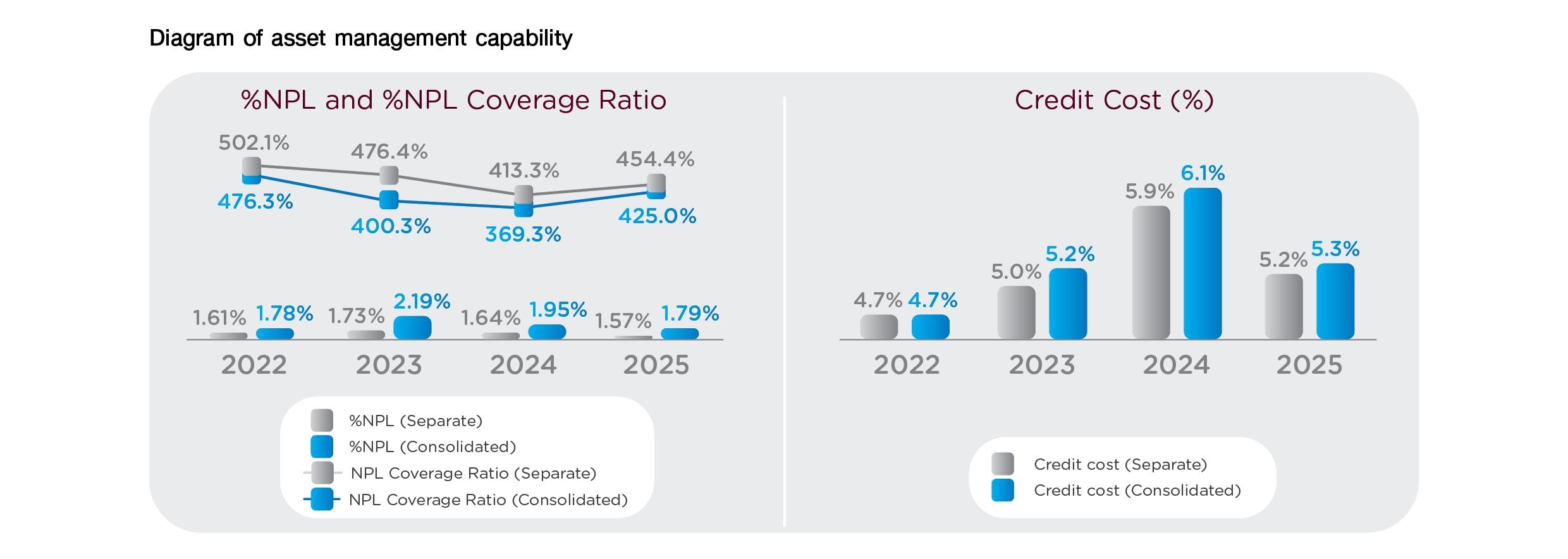
Regarding asset quality, the Group maintained strong management capability and adequate provisioning levels. This is reflected in the Group’s NPL ratio of 1.79% and NPL coverage ratio of 425.0%. Credit cost for 2025 was 5.3%, declining from 6.1% in the previous year.
The Company has commenced the insurance brokerage operations by collaborating with non-life and life insurance partners to offer a wide variety of insurance products through KTC’s channels to credit card and personal loan customers. The Company focuses on integrating technology to meet members’ needs more precisely while enhancing services and ensuring secure, privacy-conscious customer data management. This strategic initiative aims to create new business opportunities and increase fee-based income from insurance product offerings. The Company plans to grow this business gradually and prudently, contributing to enhanced service value for customers and generating non-interest income for the Company.
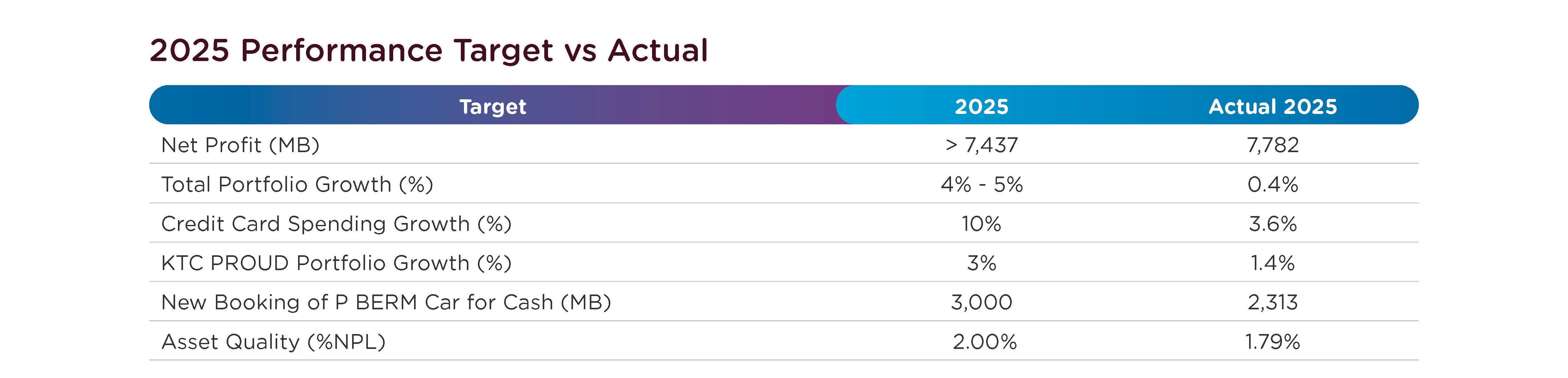
Despite another challenging year, the Group delivered higher net profit in 2025, in line with its targets. The result reflects the Group’s agility, operational resilience, and disciplined execution, alongside effective asset-quality management, with the non-performing loan ratio (%NPL) remaining within the Group’s target range. Performance was achieved against a backdrop of a slowing economy, elevated household debt, and heightened geopolitical uncertainty—including tensions between Thailand and Cambodia, the protracted conflict in the Middle East, and ongoing volatility in global trade. These risks weighed on consumer confidence and purchasing power. The Group closely monitored developments and conducted its business with prudence, guided by principles of responsible and fair conduct. Continued emphasis on asset-quality control and rigorous risk management remains central to building a stable and sustainable growth trajectory over the long term.
Operating Results & Financial Condition
Operating Results & Profitability
Revenue & Expense
Total Revenue
“Total revenue in 2025 amounted to THB 27,695 million, sustaining a growing revenue base.”
In 2025, the Group generated total revenue of THB 27,695 million, representing a modest 0.9% (YoY) increase. Growth was driven primarily by total interest income of THB 16,254 million, which increased 0.4% (YoY). This reflected a 3.1% (YoY) increase in interest income from personal loans and KTC P BERM Car for Cash. Additionally, fee income totaled THB 6,513 million, increasing 2.1% (YoY), supported mainly by higher interchange fees in line with increased card spending volumes.
Bad debt recoveries in 2025 amounted to THB 4,038 million, declining slightly by 1.7% (YoY). This performance reflects the Group’s continued effectiveness in debt collection amid a challenging economic environment.


Total Expense
“Total expense in 2025 was THB 17,239 million, decreased by 5.2% (YoY). Cost to income ratio was 34.8%”
In 2025, the Group’s operating expenses amounted to THB 9,639 million, rising marginally by 0.2% (YoY). The increase was driven primarily by higher marketing expenses to stimulate spending and new member acquisition. Nevertheless, the cost to income ratio improved to 34.8% in 2025 from 35.0% in 2024, reflecting effective cost control and disciplined expense management.

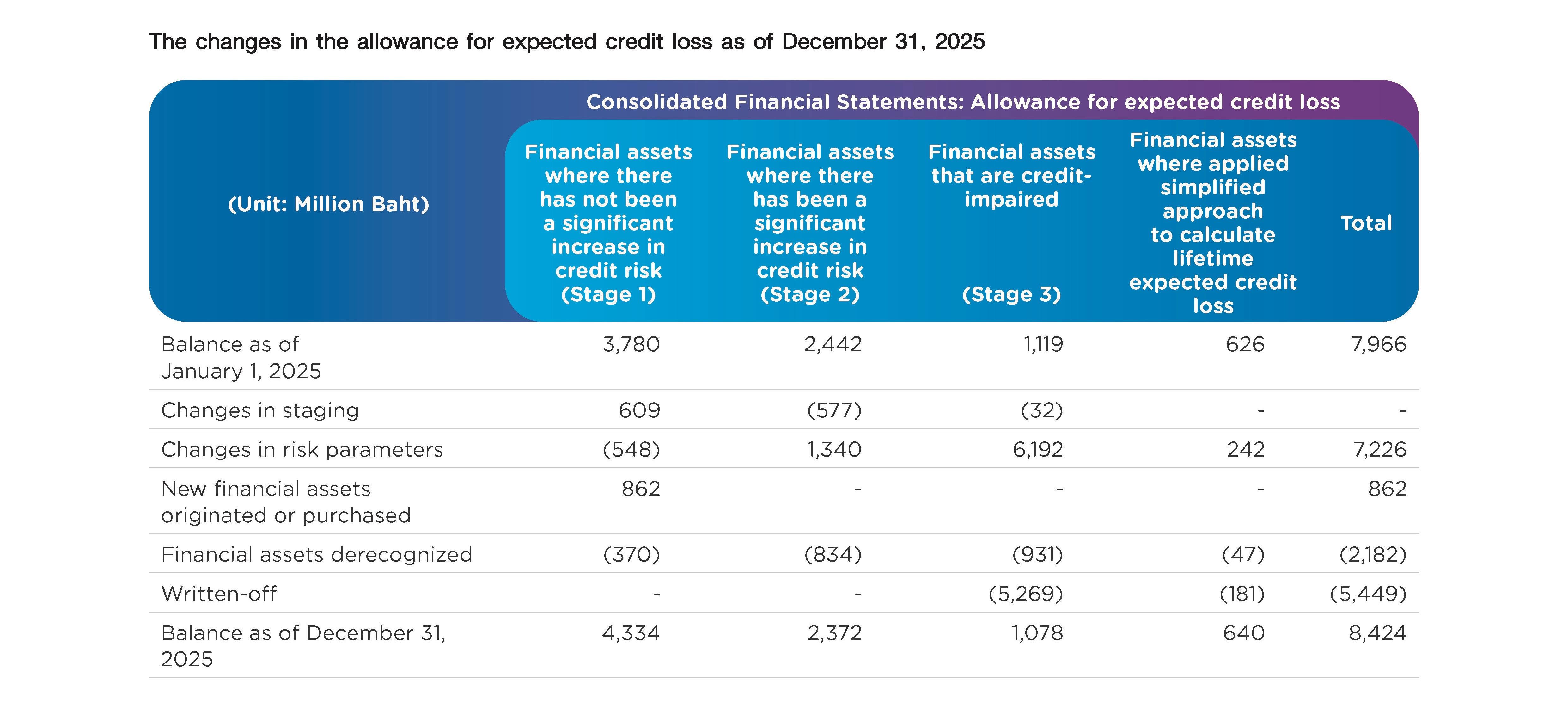
Expected credit losses totaled THB 5,906 million, declining by 12.7% (YoY). This underscores the Group’s strong portfolio management capabilities and effective credit risk management.

Financial costs decreased by 6.2% (YoY) to THB 1,694 million, primarily due to lower interest rates on new borrowings used to refinance maturing debt, in line with the downward trend in market interest rates.
Liquidity & Capital Adequacy
Borrowing
“The Group continued to emphasize strong financial discipline, as reflected by D/E ratio of 1.51 times and maintained available credit line totaling THB 20,470 million”
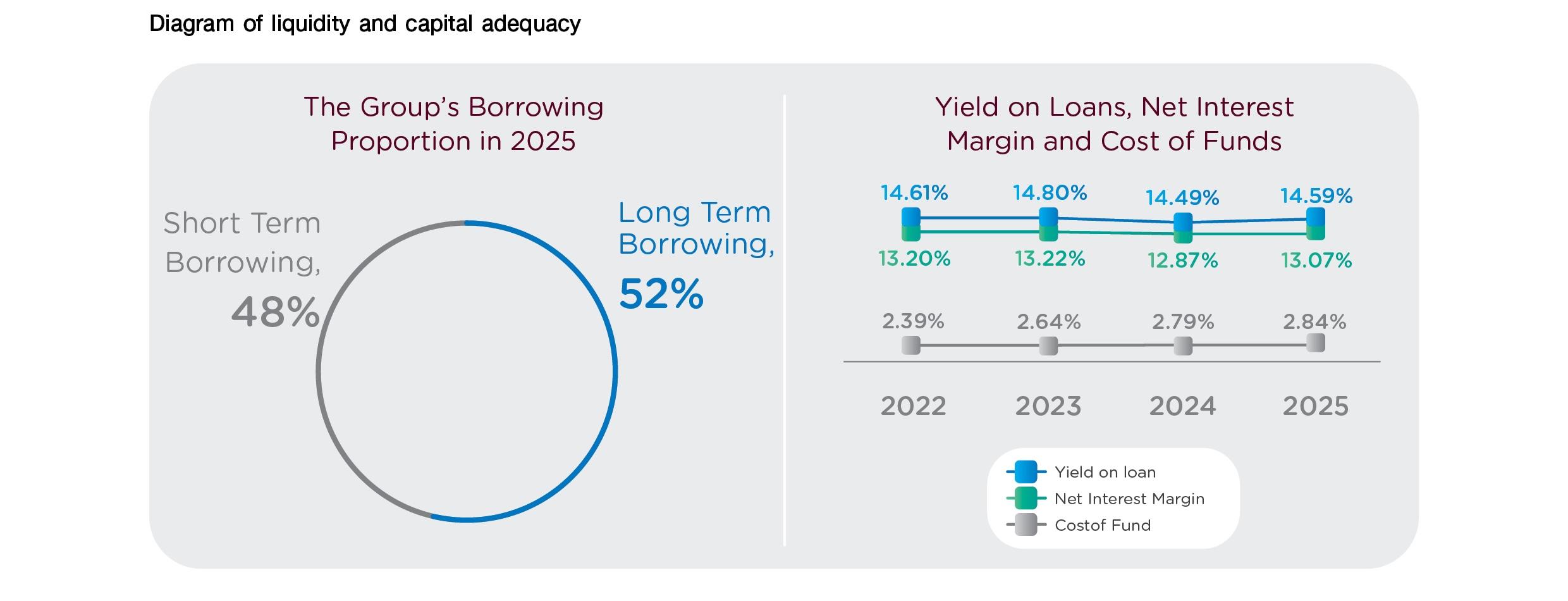
As of 2025, the Group maintains a solid capital structure with a well diversified funding base. Total borrowings amounted to THB 57,140 million, including lease liabilities. The funding mix is weighed toward long term borrowings, which account for 52 percent, while short term borrowings, comprising loans and debentures maturing within one year, represent 48 percent. KTC’s funding sources are drawn from a wide range of counterparties, spanning Thai commercial banks, securities firms, insurance companies, and investment funds. These comprise short-term borrowings from Krungthai Bank and related parties of THB 4,100 million; short-term borrowings from other financial institutions of THB 7,200 million; long-term borrowings from Krungthai Bank of THB 10,000 million; and debentures totaling THB 35,612 million. Debentures account for approximately 62% of total borrowings, underscoring strong investor confidence and the Company’s proven access to the domestic debt capital market.
Apart from capital structure management, the Group continues to uphold strong financial discipline. This is reflected in the debt-to-equity ratio (D/E) at year-end 2025, which declined to 1.51 times, relatively low compared with 1.78 times in the same period last year. The improvement was driven by two key factors: (1) robust profit accumulation, which strengthened shareholders’ equity, and (2) a reduction in borrowings, in line with the prudent expansion of the loan portfolio amid a slowing economic environment. As a result, the Company had no need to raise additional debt to support new lending. The current D/E ratio remains significantly below the covenant threshold of 10 times, highlighting the Group’s high level of financial flexibility to support future business expansion and withstand potential economic volatility.
Liquidity:
As of year end 2025, the Group had short-term available credit line of THB 20,470 million. Over the same period, debentures and long term borrowings maturing in 2026 amounted to THB 15,830 million. Available liquidity therefore exceeds near term debt obligations, reflecting a strong liquidity position and a very low risk of short term refinancing or default.
Cost of Fund:
For the year ended 2025, the Group’s cost of funds stood at 2.84 percent, up slightly from 2.79 percent. Despite the higher cost of funds, the decline in market interest rates led to lower new borrowing costs, while a smaller funding base—aligned with portfolio growth—further contributed to a reduction in financial expenses to THB 1,694 million compared with THB 1,806 million in the same period last year.
Yield on Loan and Net Interest Margin:
The yield on the loan portfolio remained resilient, supported by a higher proportion of personal loan interest income within total interest revenue. For the year ended 2025, the overall loan yield rose to 14.59 percent, compared with 14.49 percent in the same period last year. Effective portfolio mix management continued to sustain and enhance profitability. Combined with lower financial expenses, this drove an expansion of net interest margin to 13.07 percent, from 12.87 percent a year earlier.
Asset Management Capability
Portfolio Overview
At the end of 2025, KTC’s portfolio including accrued interest receivable amounted to THB 110,078 million, grew 0.9% (YoY), driven primarily by personal loan portfolio while credit card portfolio growth remained relatively flat. On a consolidated level, the Group’s total portfolio expanded by 0.4% (YoY), reflecting the contraction of the hire purchase portfolio following the Company’s policy to discontinue new originations in this segment.
Overall portfolio growth continued to be constrained by uncertainty in the Thai economic environment, stemming from both domestic and external factors. These conditions weighed on consumer confidence and exerted pressure on credit expansion across the industry:
1. Credit card receivables stood at THB 73,876 million, declining marginally by 0.1% (YoY). Spending growth remained gradual in line with a fragile economic environment, while portfolio management continued to prioritize asset quality amid heightened macroeconomic uncertainty. Cardmembers adopted a more cautious approach toward spending and new borrowing. In addition, a higher repayment rate contributed to the slight contraction in outstanding balance
2. Personal loan receivables amounted to THB 36,202 million, expanding by 3.2% (YoY). Growth was supported by disciplined portfolio management and the continuous enhancement of member benefits, which strengthened differentiation and responsiveness to customer needs. These factors remain central to driving expansion in this segment.
3. Lease receivables totaled THB 1,507 million, declining by 28.6% (YoY), in line with the Company’s policy to cease new loans in this segment since August 2023. Current efforts focus solely on collections and maintaining the quality of the existing portfolio.

Portfolio Quality
“Total NPL declined year on year to 1.79%, while the NPL coverage ratio remained elevated at 425.0%.”
The Group continues to prioritize disciplined portfolio management to maintain strong asset quality. In 2025, the Group’s non performing loan ratio (%NPL) declined to 1.79%, from 1.95% in 2024. On a company only basis, the NPL ratio remained at a low level of 1.57%, improving from 1.64% in the prior year. This reflects stringent credit and collection practices, which have driven a sustained improvement in asset quality.
The Group maintains a prudent provisioning policy to reinforce confidence in its financial resilience. In 2025, the Group’s NPL coverage ratio increased to 425.0%, from 369.3% in the previous year. On a company only basis, the ratio rose to 454.4%, from 413.3% a year earlier.
Credit cost for the Group in 2025 stood at 5.3%, declining from 6.1% in 2024. On a company only basis, credit cost decreased to 5.2%, from 5.9% in the prior year, underscore the effectiveness of the Group’s asset quality management.
Material & Related-Party Transactions
Transactions under the Management's approveal authority, which were executed within the framework established by the Board of Directors and under general commercial terms, futher details can be found in "Section 9.2: Related Party Transactions".
Debt Securities with Financial Ratio Requirements
Debt Securities with Financial Ratio Requirements Issued?
Yes
Can the Company Maintain the Reported Financial Ratios?
Yes
Explanation
Debt covenants is not greater than 10 times and debt to equity ratio (D/E Ratio) stood at 1.51 times, a decrease compare to the end of 2024, which was 1.78 times and remains below the debt covenants.
Factors That May Affect Financial Condition
Factors or Incidents That May Materially Affect Financial Condition
Industry Overview
Following the latest Monetary Policy Committee (MPC) meeting on December 17, 2025, the Bank of Thailand maintained its forecast for Thailand’s economic growth in 2025 at 2.2% and revised its outlook for 2026 downward to 1.5% from the previous estimate of 1.6%. The moderation reflects weaker private consumption amid declining income prospects, as well as slower exports affected by U.S. tariff measures. Meanwhile, the tourism sector is expected to recover gradually.
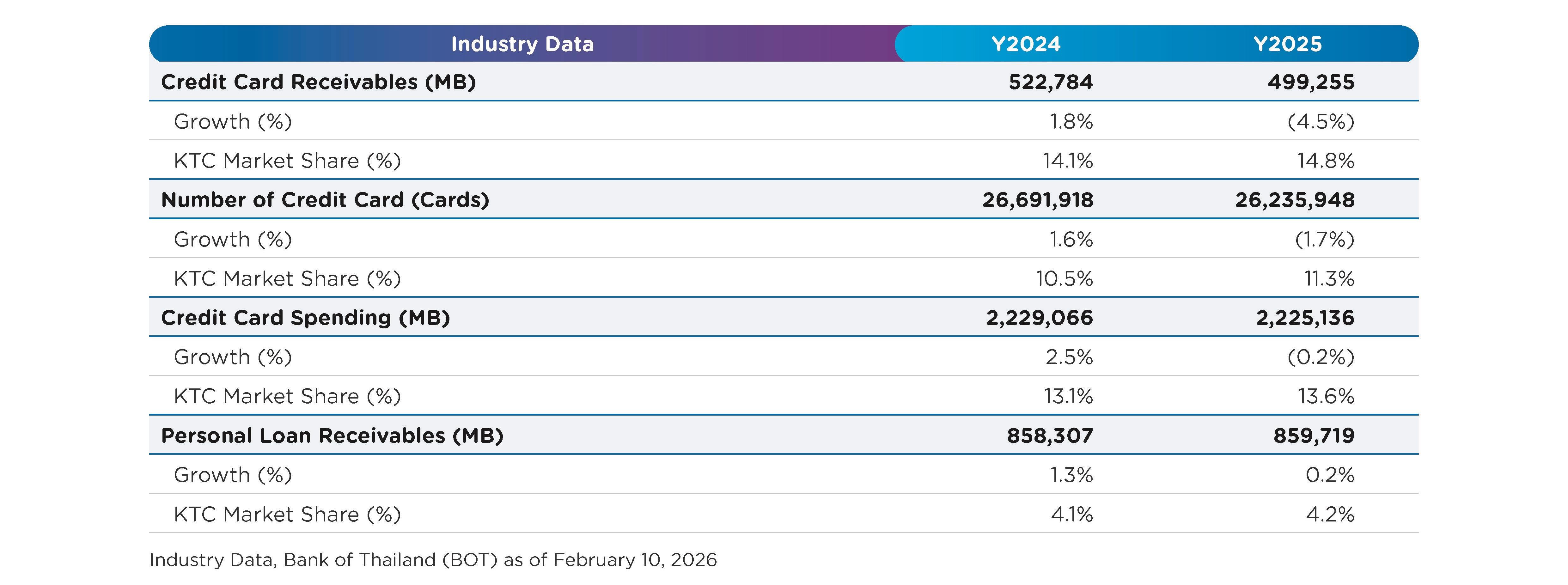
According to data from the Bank of Thailand for 2025, the total industry’s credit card receivables stood at THB 499,255 million, representing a contraction of 4.5% (YoY). Conversely, the industry’s personal loan receivables reached THB 859,719 million, showing a growth of 0.2% (YoY). Total credit card spending across the industry amounted to THB 2,225,136 million, a slight decline of 0.2% (YoY). On the other hand, KTC’s credit card spending reached THB 302,527 million, achieving a growth of 3.6% (YoY).
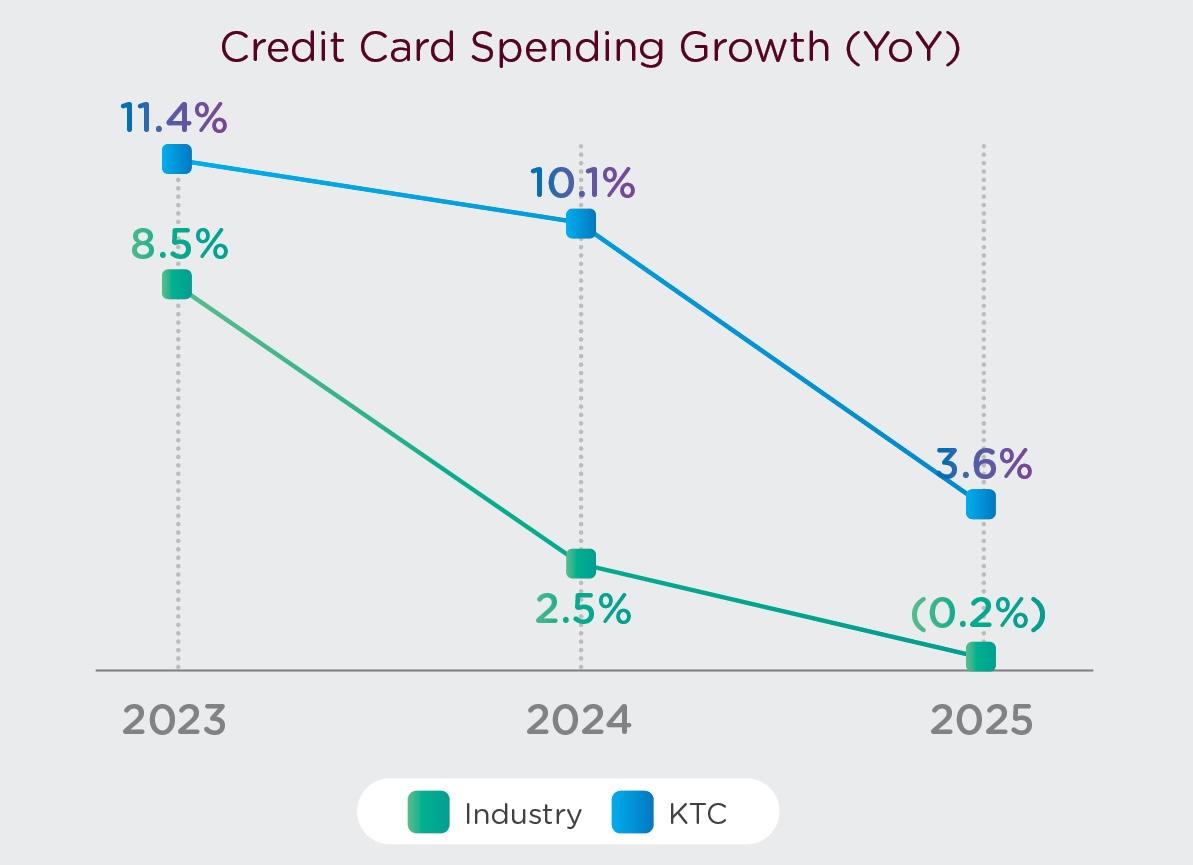
Despite the contraction in the overall consumer lending industry, driven by economic uncertainty and more cautious consumer spending, KTC continued to gain market share across all core products for 2025 compared to last year, as follows:
Credit card receivables: market share increased to 14.8% from 14.1%
Credit card spending: market share increased to 13.6% from 13.1%
Personal loan receivables: market share increased to 4.2% from 4.1%
As of year-end 2025, KTC had a total of 3,673,244 accounts, comprising 2,964,426 credit cards, up 5.9% (YoY), and 708,818 personal loan accounts, up 2.9% (YoY).
BOT’s Sustainable Household Debt Solution Program and Potential Impacts
KTC continues to implement long term debt relief measures in line with the Bank of Thailand’s Notification No. 3/2025 on Responsible Lending. These guidelines are designed to strengthen the role of financial service providers in supporting customers responsibly throughout the entire debt lifecycle. KTC assesses each customer’s credit application based on individual repayment capacity, ensuring that new credit does not impose an excessive additional burden beyond existing obligations. Key assistance measures include reductions in minimum payment requirements, the conversion of credit card balances into long term personal loans, interest rebates credited back to customers’ card accounts, targeted support for customers classified as Severe Persistent Debt, extensions of repayments, and installment reductions.
As a non-bank financial institution within the Krungthai Bank Group, KTC has actively cooperated with the Bank of Thailand by participating in both Phase 1 and Phase 2 of the “You Fight, We Help” program. The initiative aims to support vulnerable debtors in restoring their repayment capacity and ultimately settling their obligations once income recovers. Registration for the program closed on September 30, 2025. Moreover, in situations where customers are affected by natural disasters, such as flooding in southern Thailand, KTC implements relief measures, including reductions in minimum payment requirements and installment amounts. Affected customers may apply for these measures to ease their financial burden and facilitate a faster recovery.
In addition, the Company has joined the “Clear Debt, Move Forward” program, under which KTC will transfer and sell unsecured non-performing retail loans overdue for more than 90 days (NPL), based on borrower’s status as of September 30, 2025. Eligible debtors are those with total NPL exposure across all financial service providers and all loan types not exceeding THB 100,000 per person. These receivables will be transferred to Sukhumvit Asset Management Company Limited (SAM) for debt restructuring under more accommodative terms and for the reduction of borrowers’ debt burdens. Registration for the program will be available through channels of the Bank of Thailand starting January 5, 2026.
The Company assesses that participation in these programs, as well as the aforementioned debtor assistance measures, will not have a material impact on the Group’s overall operating performance. In this regard, the Company has already established adequate allowances for doubtful accounts.
Further details on these measures are available on the Company’s website: https://www.ktc.co.th/en/about/news/measure.
KTC’s Strategy Incorporating Sustainability Development
KTC has integrated sustainability across economic, social, and environmental dimensions into its business operations, with a commitment to conducting business responsibly, fairly, and transparently. The Company focuses on advancing innovation and digital technology to develop products and services that meet customer needs and create value for all stakeholders, with the objective of guiding both the organization and Thailand toward sustainable growth. The Company’s sustainability strategy and operating framework are summarized as follows:
Governance Excellence
KTC elevates corporate governance standards to ensure transparency, accountability, and adherence to business ethics. The Company strengthens its risk management and data management systems to support operations and high-quality reporting, thereby building trust and confidence among all stakeholders.
Green Growth
The Company pursues business growth alongside environmental stewardship through initiatives to reduce greenhouse gas emissions, enhance resource efficiency, and promote environmentally responsible behavior across the organization and its supply chain. These efforts are embedded in KTC’s products and services and aligned with national policies aimed at advancing a low carbon economy and achieving net zero greenhouse gas emissions by 2050.
Responsible & Inclusive Finance
KTC develops and delivers financial products and services that enhance the quality of life for customers across all segments, enabling fair and equitable access to financial services. The Company also promotes financial literacy to improve social well-being, while strengthening workforce capabilities as a key driver of sustainable growth. In parallel, KTC supports respect for human rights at both the organizational and societal levels.
Digital SD Innovation
The organization is driven by digital technology and innovation to develop value-creating products and services that respond to customer needs. These efforts are accompanied by a strong emphasis on data security and privacy for customers and stakeholders, reinforcing the Company’s long-term competitiveness in the digital era.
Culture Transformation
KTC fosters an organizational culture anchored in a sustainability mindset, embedded across all levels and processes. This is achieved through the integration of sustainability objectives and key performance indicators at both corporate and business unit levels, together with continuous learning and active employee engagement, ensuring that sustainability becomes an integral part of KTC’s business practices.
KTC supports the United Nations Sustainable Development Goals (SDGs). Further details can be found at: https://www.ktc.co.th/en/sustainability-development.
KTC Direction in 2026
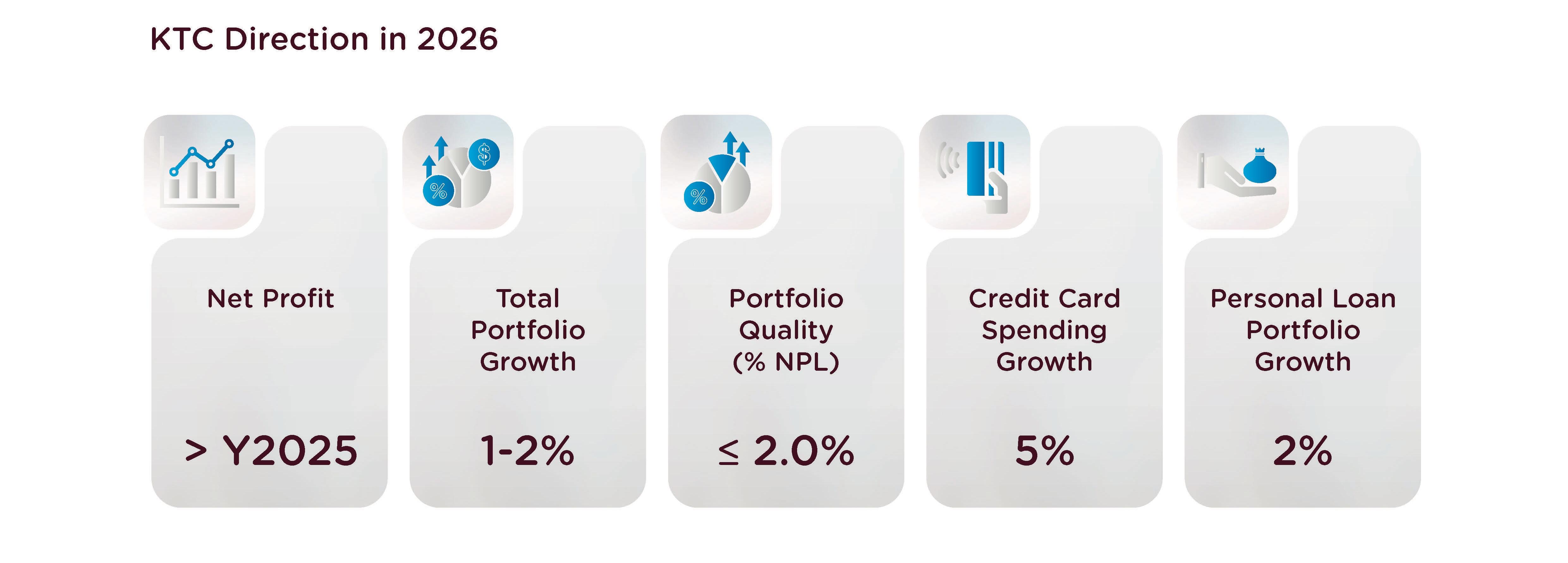
For 2026, KTC will focus on strengthening the existing loan portfolio, sustaining growth in card spending, and increasing investment in digital technology through the rollout of the Company’s new core system. This transformation will enhance operational flexibility, elevate customer experience, and improve overall efficiency. KTC will continue to support the growth of its two core businesses, credit cards and personal loans, while extending into a new business segment, insurance brokerage, to broaden and build sustainable revenue streams. The Company places strong emphasis on comprehensive risk management, leveraging data and advanced analytics to maintain portfolio quality, with a primary focus on preserving asset quality and long-term financial stability.
Interested parties may follow the Company’s updates via the Investor Relations website at https://www.ktc.co.th/en/investor-relations. KTC regularly conducts investor relations activities for both equity and debt investors, as well as analysts, fund managers, and other stakeholders. These include direct engagements with management, during which the Company provides updates on business through Opportunity Day events. Replays of past sessions can be viewed at: https://www.set.or.th/en/market/product/stock/quote/ktc/company-profile/oppday-company-snapshot.